Mobile Casino Not on GamStop Phone Payment Risks
 Available in GB
A mobile casino not on GamStop may accept a phone payment, but that convenience is not a protection badge. Phone-bill deposits are usually tightly limited and often cannot be withdrawn back to the bill; offshore sites have no Great Britain licence, so UK protections do not apply. The payment route deserves more scrutiny than the bright button suggests.

As of 18 November 2026, the distinction I care about is not whether a cashier has a mobile-shaped icon, but what happens after the money leaves the handset. A direct carrier-billing charge can be easy to make and awkward to reverse. An ordinary card or e-wallet may behave quite differently, while the casino itself may have no UK regulator to answer to.
The UK baseline is clear. The Gambling Commission says commercial gambling services offered to consumers in Great Britain require its licence, even when an operator holds a licence elsewhere. Offshore sites are not licensed in Great Britain; UK protections and the UK complaints route do not apply to them. The Commission warns that unlicensed sites may have inadequate social-responsibility and anti-money-laundering controls. Its illegal-markets team had referred 447,778 search-engine URLs and secured 287,961 removals since April 2024, in figures published 21 October 2025. That is a measure of enforcement activity, not a promise that every risky site has vanished.
GamStop is the national online self-exclusion scheme for Great Britain-licensed operators; the name is often typed “gamestop”. An exclusion holds for its full chosen term and remains in place afterwards until the person contacts GamStop to remove it. An offshore site is not a way round that protection. For support, GamCare runs the free National Gambling Helpline on 0808 8020 133, 24 hours a day, every day.
Why Phone Billing Is a Narrow Payment Route
Pay by mobile casino not on GamStop is a search phrase that tends to make a limited payment method sound like a general-purpose wallet. It is not. Carrier billing places a charge on a mobile account or deducts it from prepaid credit. The network may set a modest cap, exclude certain transactions or collect the amount through a later bill. It is designed for buying digital services, not for moving winnings back to a bank account.
The practical distinction is between a deposit channel and a withdrawal channel. A casino may let an account be funded by phone billing but require payouts to a different method. That creates a mismatch: deposits may be quick, while the route home for winnings is slower, unclear or subject to identity and payment checks. No fact sheet figure supports a universal carrier-billing limit or fee, so any site claiming a standard amount across networks is making a claim that needs checking against the actual carrier terms.
By comparison, the Gambling Commission records that 96.3% of 44.2 million withdrawals at large online operators cleared automatically between June and September 2024; 3.5% cleared within 24 hours and 0.1% took up to 48 hours. These are UK-licensed operators, not offshore casinos and not a guarantee for every account. Still, it is a useful benchmark. For offshore phone-bill deposits, there is no equivalent UK standard to lean on.
What Payment Method Actually Does
Carrier billing
A carrier-billed deposit is charged through the mobile operator, commonly appearing on the next bill or coming out of prepaid balance. The carrier, payment intermediary and casino may all impose separate conditions. Check the mobile provider’s terms for premium-content or third-party purchase blocks, transaction caps and dispute procedures before treating the charge like a card purchase. A carrier charge is not cash in a casino wallet that can automatically be returned by reversing the same transaction.
Debit card
A debit card can be used for deposits at some sites, but acceptance says nothing about licensing or withdrawal quality. British-licensed remote casinos must use a payment service provider for payments from Great Britain customers. They must also disclose the applicable protection rating for customer funds. An offshore operator does not inherit those duties merely because the card is issued in Britain. Card disputes also have rules and limits; they are not a dependable substitute for a proper gambling complaint process.
E-wallet
An e-wallet may separate the casino transaction from the bank account, but fees and currency conversion can take a bite. For example, Skrill lists a bank-transfer withdrawal fee of 2.80%, with a minimum EUR 3.50, and a 4.49% foreign-exchange fee when conversion is needed. These are wallet-provider charges, not casino charges. Read both schedules. Two small-print menus make a poor substitute for one clear price.
Cryptocurrency
Crypto payments bring network fees, confirmation waits and exchange-rate movement. Bitcoin targets an average block interval of ten minutes, but that is no timetable: the probability of a block arriving within ten minutes is about 63%, rising to 95% within 30 minutes. Any casino-side processing time comes on top. A transaction sent to the wrong address may be difficult or impossible to recover, so speed claims need to be read as marketing until the full route is clear.
Bank transfer
Bank transfers have their own settlement windows and bank limits; the scheme ceiling is not necessarily the customer’s own limit. UK-licensed operators must explain how customer funds are protected in the event of insolvency and state the protection category in their terms. That disclosure does not mean a balance is guaranteed back if the operator fails. With offshore operators, check the actual terms rather than borrowing confidence from a familiar payment logo.
| Payment route | What the benchmark says | The practical catch |
|---|---|---|
| Phone bill / carrier billing | No universal UK casino cap or standard fee is established in the facts | Usually a deposit route; check carrier limits, bill timing and refund process |
| UK-licensed casino withdrawal | 96.3% cleared automatically, June–September 2024 | Large-operator benchmark; not a promise for every payment method |
| Skrill bank withdrawal | 2.80%, minimum EUR 3.50 | FX conversion may add 4.49% |
| Bitcoin | 10-minute average block target | Only about 63% chance of a block within ten minutes |
The Bill Is Not the Cashier
A mobile deposit casino not on GamStop can involve three separate relationships: the player and casino, the player and mobile network, and the network or payment intermediary that processes the charge. The casino may describe a deposit as “instant”; the mobile operator may place it on a later bill; and a refund may have to travel through a different route. The word instant describes the button, not necessarily the whole transaction.
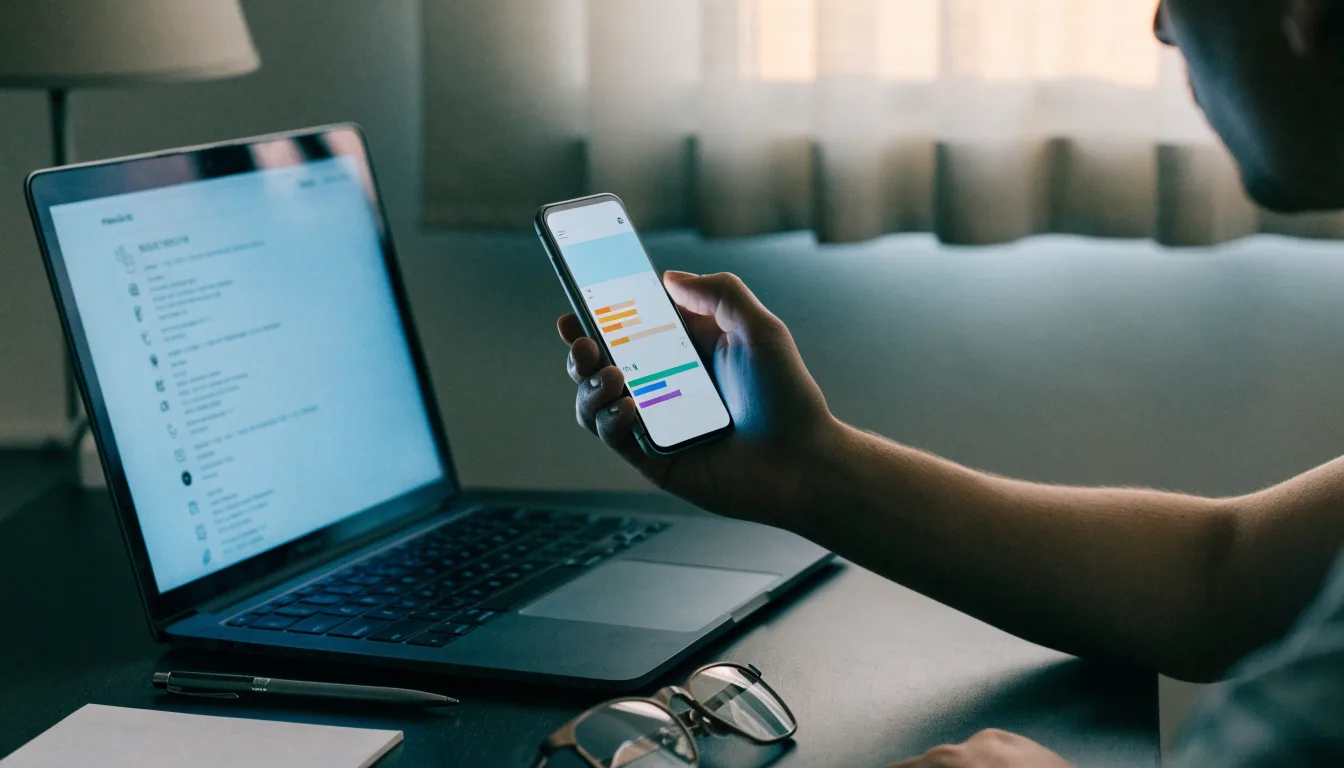
First, the account is funded. The casino or payment processor submits a carrier-billing request, which may be approved or rejected under the network’s eligibility rules. A successful charge is then credited to the casino balance, subject to its own account rules. Later, a withdrawal may be sent only to a bank account or e-wallet, not back through the phone bill. That is when the player discovers that the deposit method and payout method are not mirror images.
At a British-licensed operator, identity checks should happen before gambling, and the operator must explain what information may be needed before a deposit. If information could reasonably have been requested earlier, it must not be demanded as a condition of withdrawal; a separate legal obligation, such as an anti-money-laundering check, can still require information at that stage. The Commission sets no fixed maximum payout time, but says there is no valid reason to delay a withdrawal where there are no regulatory concerns.
Offshore terms can contain a different set of levers: large minimum withdrawals, staged payouts, conversion charges, bonus restrictions, or a requirement to use a particular payment route. A term allowing an operator to delay without a clear reason or change the route at its discretion is not a minor footnote. It is the whole transaction with the trapdoor left open.
Reading the Licence, Not the Logo
A mobile payment method cannot establish that a casino is trustworthy. A foreign licence, where it exists, is not a Great Britain licence and does not make the site lawful to offer commercial gambling to consumers here. The Commission advises checking its public register and ensuring that the listed activities and domain names match the site. A badge copied onto a page is not verification.

Curaçao’s licensing system changed under the LOK, which took effect on 24 December 2024. The former master-licence and sub-licence model ended; legacy orange certificates ended on 15 October 2025. The Curaçao Gaming Authority distinguishes a domain-specific Certificate of Operation Seal from a general licence certificate. A proper Certificate of Operation Seal should redirect to the authority’s certificate service, and its certificate domain must match the site being used. A historic /JAZ number is not proof of a current licence.
That is more useful than counting seals. The operator still needs transparent withdrawal rules, credible customer support and a payment route whose fees are stated before the deposit. A licence from a foreign regulator may provide some avenue for a complaint under its own rules, but it does not import UK consumer protections, UKGC oversight or the British ADR system.
Five Signs Worth Checking
The exact domain appears on a regulator’s register
Search the regulator’s own register, rather than trusting a footer badge. Check the legal entity, status and domain against the exact address in the browser. For a Great Britain licence, the Gambling Commission register is the standard of comparison. If a seal opens a certificate for another domain, treat it as a serious warning, not a clerical flourish.
The deposit and withdrawal rules agree
Read the cashier and the terms before an account is funded. Look for whether carrier billing is deposit-only, which withdrawal methods are accepted, minimum and maximum amounts, processing stages and any conversion charge. If the site will not say how a phone-bill deposit can be paid out, the missing answer is itself information.
Fees are stated before the click
Compare the casino’s fee with the carrier or wallet provider’s schedule. Check whether currency conversion is automatic, whether the bill is charged immediately or later, and how a disputed purchase is handled. “No fee” can mean only that the casino charges none; it does not settle what the intermediary or network charges.
Identity checks are explained in advance
A British-licensed operator should tell customers what identity information may be needed, in what circumstances and in what form before deposits. A request for documents can be legitimate, especially where anti-money-laundering duties apply, but a surprise request at payout is a poor sign if it could reasonably have been made earlier. Check the explanation, not just the upload button.
Complaint and exclusion information is real
A UK-licensed site must offer its own complaint procedure and access to an approved alternative dispute resolution entity if the dispute remains unresolved after eight weeks. Offshore sites do not offer that UK route by default. Check the named regulator, complaint address and independent dispute process in the terms. If self-exclusion is relevant, use GamStop and remember it remains in force for the full term, then until GamStop is contacted to remove it.
A Sensible Check Before Any Mobile Payment
- Identify the operator and jurisdiction. Find the legal entity and check the exact domain on the regulator’s register. This distinguishes a current authorisation from a borrowed badge.
- Read the carrier’s purchase rules. Check whether third-party billing is enabled, what caps or blocks apply, when the charge appears and how disputes are handled. Network terms govern the bill, not casino marketing.
- Trace the withdrawal route. Confirm in writing which methods can receive a payout, whether the original deposit must be returned first and what limits or processing steps apply. A deposit route alone tells half the story.
- Add up every fee. Check the casino, carrier, payment processor and any currency conversion charge. A payment can be “free” at one stage and expensive at the next.
- Read bonus terms separately. Offshore sites are not bound by the UKGC’s 10-times wagering cap or its UK fair-terms regime. Check wagering, expiry, game contribution and maximum cashout terms before accepting an incentive.
- Keep the records. Save the payment confirmation, bill entry, terms shown at the time and any support correspondence. If something goes wrong, a dated record is more useful than a memory of a promotional banner.
What the Numbers Can and Cannot Tell Us
The market is large, but its size does not make every route safe. The Gambling Commission reported £8.3 billion in remote casino, betting and bingo gross gambling yield for April 2025 to March 2026. That is a measure of the regulated sector’s yield, not the amount staked through mobile billing and not a statistic about offshore phone deposits.
For illegal-site exposure, the Commission’s November 2026 analysis estimated that 2.5% of people who had gambled online in the previous four weeks had engaged with illegal gambling websites; another 1.5% had done so in the previous 12 months. The Commission also identified 586 illegal gambling websites accessible to consumers in Great Britain in September 2026. Those figures describe a market that enforcement keeps disrupting, not a tidy list of sites with stable payment arrangements.
The most useful payment benchmark remains the withdrawal data: 96.3% of large UK operators’ recorded withdrawals cleared automatically in June to September 2024. That is what a regulated, measurable system can report. No equivalent number in the facts establishes how quickly phone-bill deposits at offshore casinos are refunded or how many arrive at a bank without dispute. Absence of a benchmark is not proof of misconduct; it is a reason not to mistake a payment icon for evidence.
Common Questions About Mobile Casino Payments
Can a casino charge deposits to a mobile phone bill?
Some casinos and payment intermediaries offer carrier billing, but availability depends on the network, account type, territory and provider rules. It may be rejected or capped, and the amount may appear on a later bill rather than being deducted immediately. The key point is to establish the charge route and dispute process before authorising it, not to infer terms from the cashier logo.
Can winnings go back to the phone bill?
Not necessarily. Phone billing is commonly a way to fund a purchase rather than a withdrawal destination, so a casino may require a bank account or e-wallet for payouts. Check whether the terms explain the route for returning a deposit and winnings, including any identity checks and processing stages. If the site says only that deposits are accepted, it has not answered the withdrawal question.
Is paying by mobile phone bill safer than using a card?
It is different, not automatically safer. A carrier may allow a charge to be disputed under its own process, but that does not guarantee a casino refund or undo losses. A card has its own protections and limitations. Neither route makes an offshore casino licensed in Great Britain or gives the customer the UKGC complaints and enforcement framework.
Are mobile casinos not on GamStop legal in Great Britain?
The Gambling Commission says it is illegal to offer commercial gambling services to consumers in Great Britain without a Commission licence, including where the operator has a licence in another jurisdiction. The offence concerns providing gambling facilities; the facts here do not say that an adult customer commits that operator offence merely by using a site. The distinction is no endorsement: the site remains outside UK licensing protections.
Does GamStop cover offshore phone-bill casinos?
GamStop applies to participating online operators licensed in Great Britain, not to every gambling service worldwide. The fact sheet notes that offshore sites are not connected to the scheme, a point marked unconfirmed in its source classification but consistent with GamStop’s stated scope. An offshore casino must never be treated as a workaround: an exclusion lasts for its full term and remains until GamStop is contacted to remove it.
Where can people get help with gambling harm?
GamCare’s free National Gambling Helpline is 0808 8020 133, open around the clock every day, with live chat and WhatsApp also available. In Wales, the listed number is 0808 2819 265. GamCare provides information and support, while the NHS and other services offer treatment and practical help. The helpline is not an emergency crisis line.
The Payment Icon Is Not Protection
A mobile casino payment is only as dependable as the route behind it: verify the licence, read the carrier and withdrawal terms, and count every fee before a charge is made. The clearest comparison remains that 96.3% of withdrawals at large UK-licensed operators cleared automatically in June to September 2024; offshore phone-bill payments have no comparable UK benchmark. Blog treats that gap as the story, not a footnote.
Casinos Not on GamStop – Blog
Content created by the «Casino Not on GamStop» team